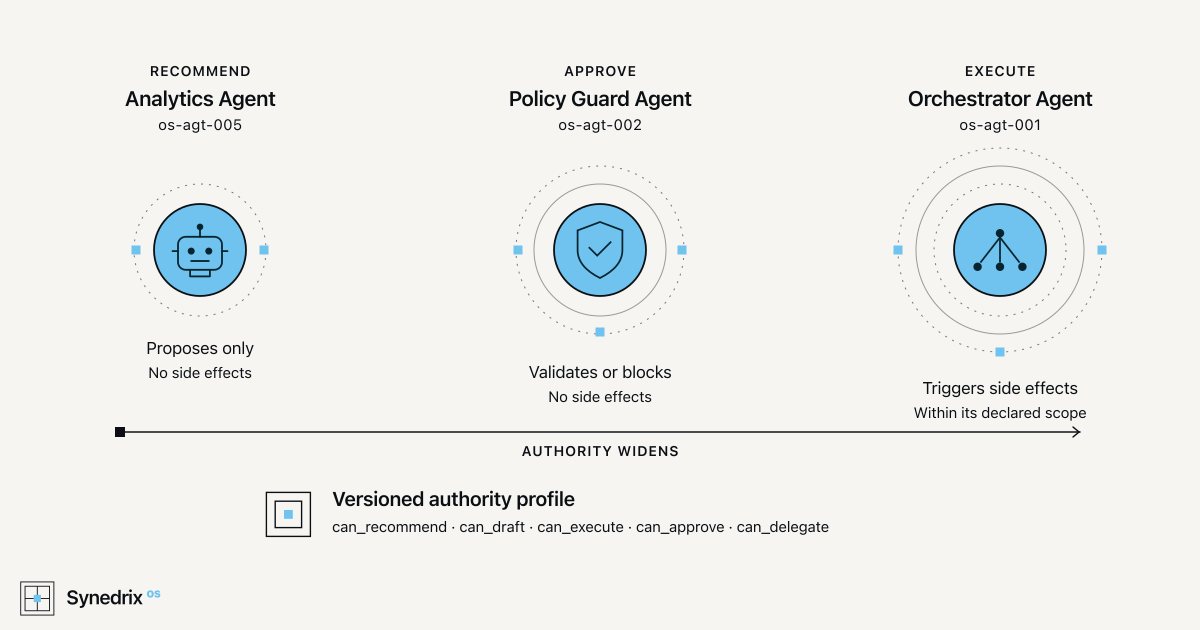
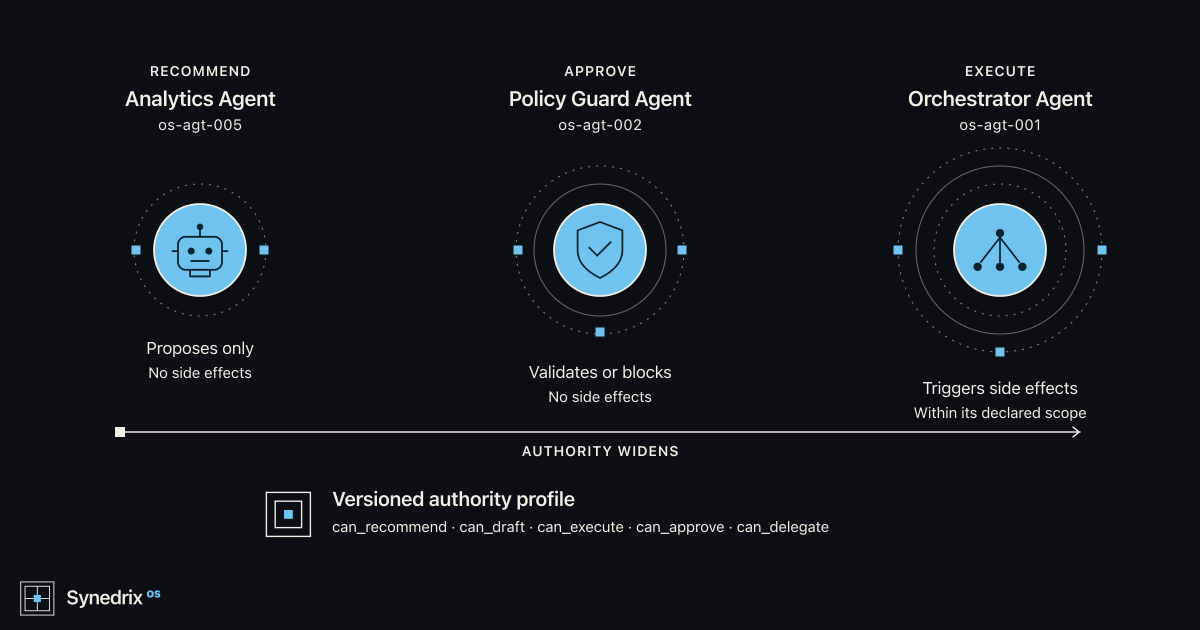
The authority boundary: what agents can and cannot do
An agent's authority belongs in a versioned record, not its prompt. See how Synedrix OS uses recommend, approve and execute scopes to bound what agents do.
ReadHow Synedrix OS checks proposed actions before they run, with policy decisions, human approvals and business thresholds that keep execution accountable.
An agent's authority belongs in a versioned record, not its prompt. See how Synedrix OS uses recommend, approve and execute scopes to bound what agents do.
Read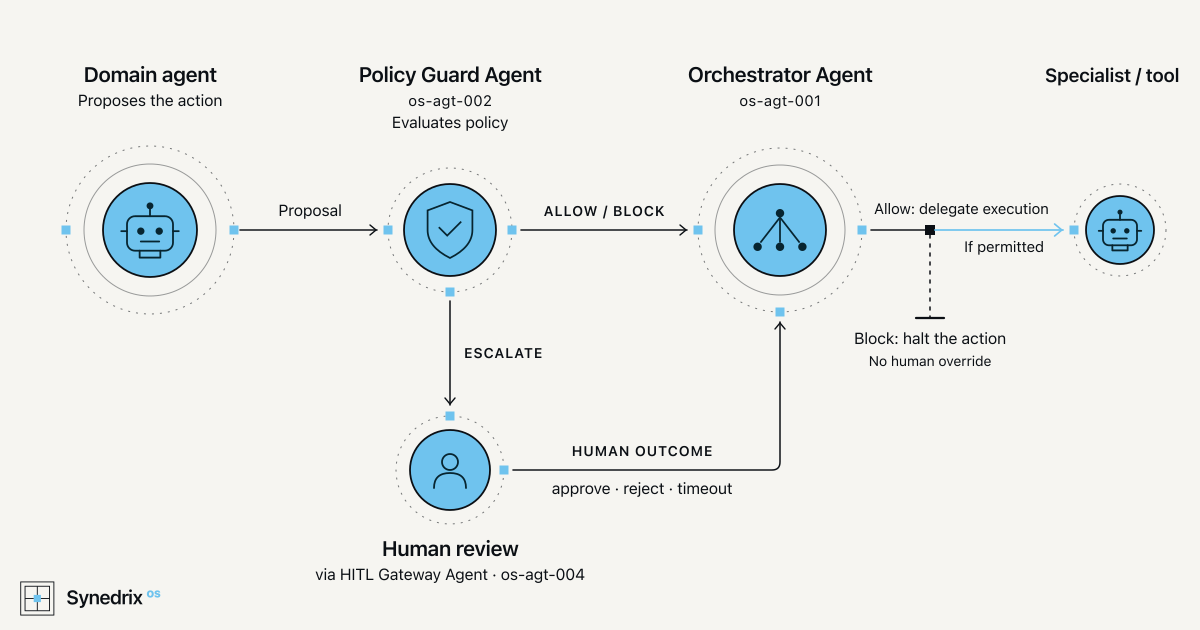
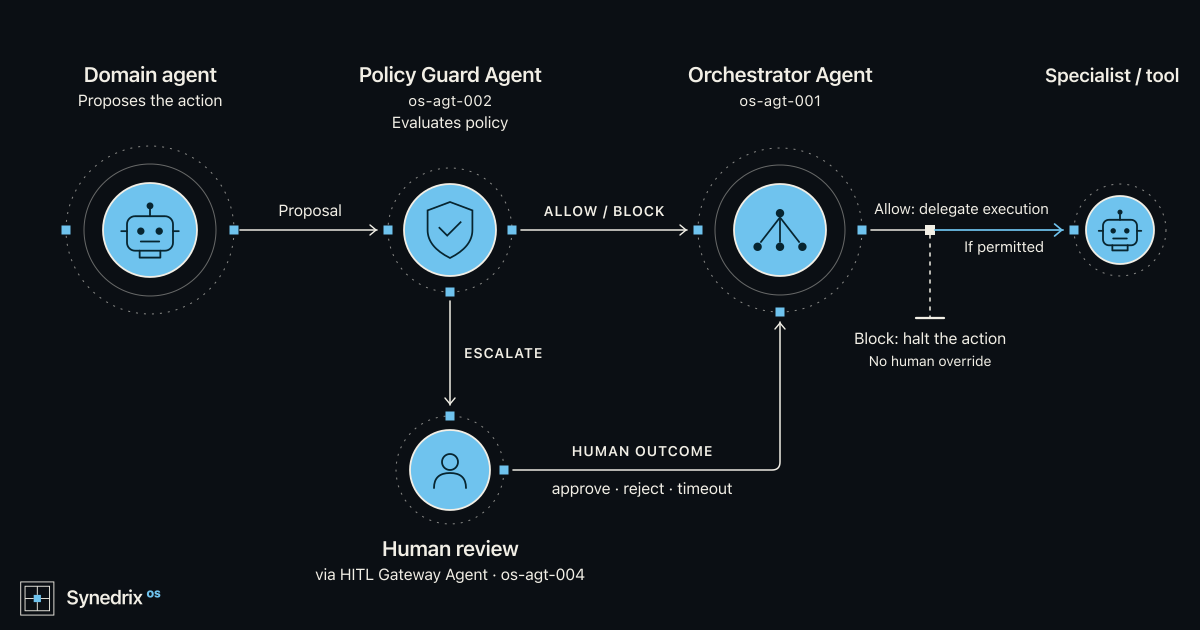
Synedrix OS checks proposed actions before they run. Learn how policy decisions, human approvals and business thresholds govern a refund through execution.
Read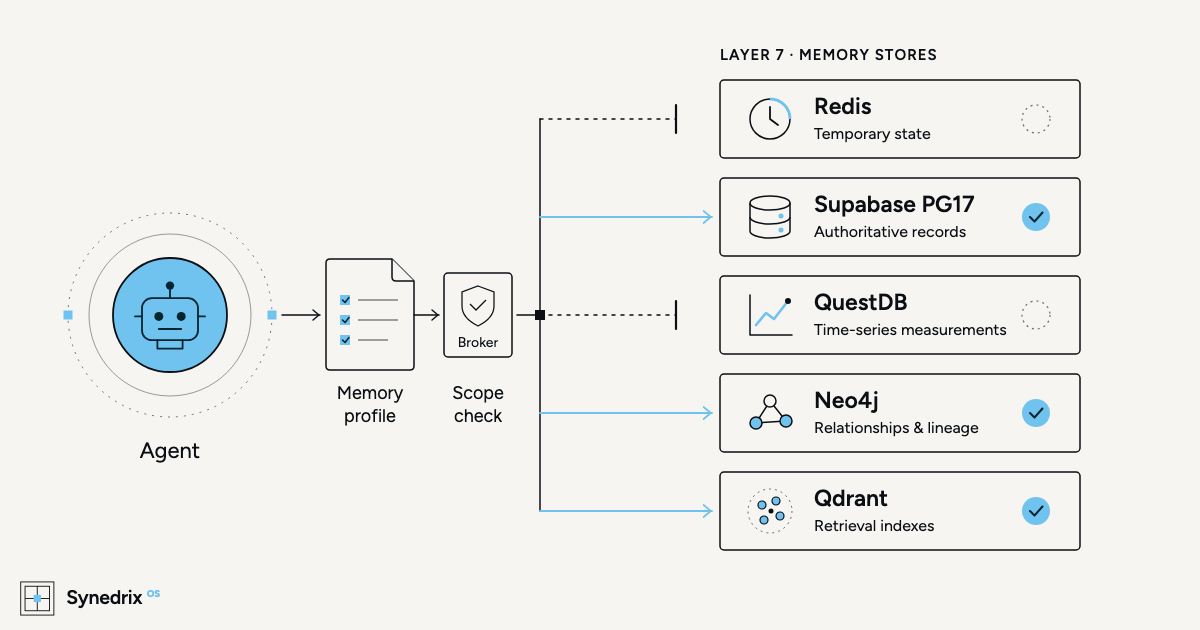
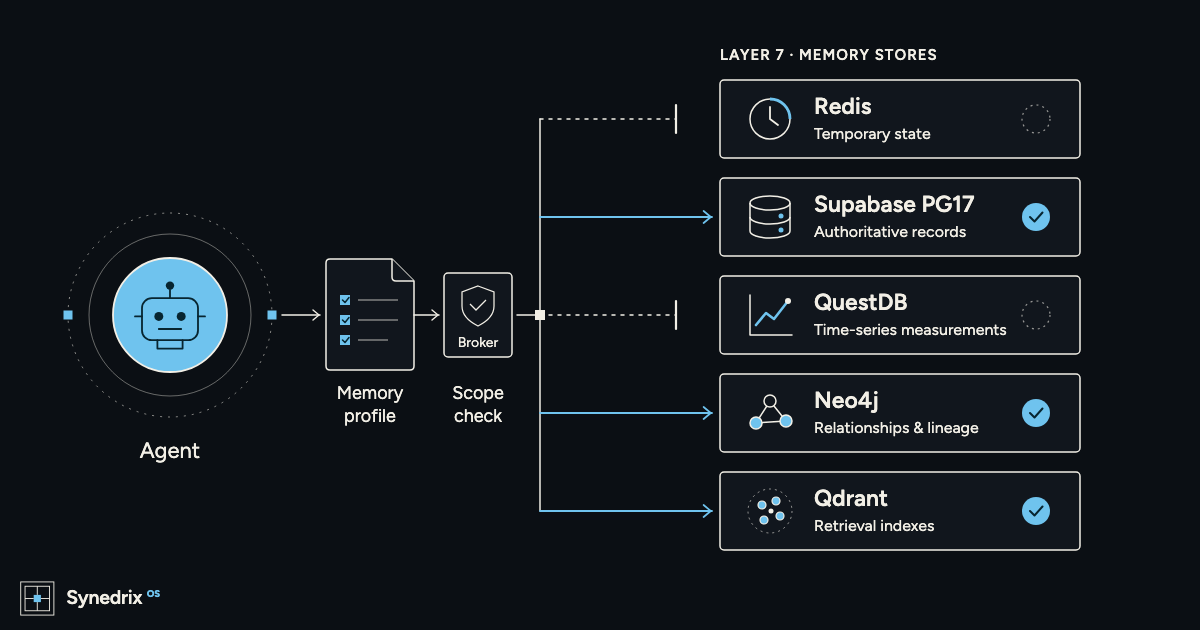
Synedrix OS separates kinds of memory, the stores that hold them and who may read or change them, so agents use information with clear permissions and evidence.
Read

Each of the 12 Synedrix OS layers states what it owns and what it must not own. See all twelve in five slices and why the exclusions make drift detectable.
Read

Twelve design principles in five clusters set the limits that make an agentic system trustworthy. See what each requires and why trust is the aim they serve.
Read

Synedrix OS is the governed operating layer for agentic business systems: routing, agent lifecycle, shared context, governance and observability built once.
Read

Static workflows encode a fixed process and push every exception to a person. See how five capabilities coordinate specialised agents toward a goal instead.
Read

AI assistants can speed up individual tasks while approvals and handoffs stall. Learn what coordination across people and systems requires beyond faster work.
Read

Coordination debt is the cost of people translating context across enterprise systems. Learn why new tools speed tasks but leave organizational handoffs intact.
Read